
Assessment Writing: Ultimate Guide for Observable Behaviour
When it comes to effective assessment writing, focusing on observable behaviour is key to ensuring clarity, accuracy, and fairness. Assessments based on observable actions allow trainers and assessors to evaluate real-world skills, providing measurable evidence of a learner’s competence. In this ultimate guide, we’ll show you how to create assessments that focus on observable behaviour, making them easier to administer and more reliable in measuring learner outcomes. Whether you’re in VET or another training environment, mastering this technique will boost the quality of your assessments, streamline evaluation, and help you meet compliance standards. Get ready to create actionable, performance-based assessments that deliver results!
What is Observable Behaviour?
Observable behaviours are events or actions that are performed by an individual.
In simple words, observable behaviour includes anything a person can see someone else doing, for example, walking, picking up a box or changing a nappy. The observable behaviour has end goals that a person performing a task aims to achieve.

Why is it Important to define a Behaviour?
Clearly defining the observable behaviour enables the assessor to better understand the expected end goals of the task. It also enables bringing consistency when different assessors are observing students.
What Happens When the Observable Behaviour is not Clearly Defined?
When the observable behaviour is not clearly defined, it may be open to interpretation, and when different assessors observe the students, they may come up with different answers. For example, The assessor who has just started in the role might not have in-depth experience and knowledge as compared to the one who is already working in the field for more than twenty years, and when they might be observing the class to check the student competency, they both might end up with a different set of observable behaviour which will not bring consistency between the assessment methods and will lead to a breach of the:
Clause 1.8-1: Principles of assessment-Reliability-that clearly defines that the “Evidence presented for assessment is consistently interpreted and assessment results are comparable irrespective of the assessor conducting the assessment.”
When and Where to Record Observable Behaviour?
When:
Where the assessor needs to watch the students perform the actual task and then make their judgment of competence
Where:

Observable behaviours will generally be evidenced and recorded by using a tool such as an observation checklist that enables the assessor to:
- Observe the students in an intensive way
- Taking structured notes helps when making an assessment decision, as they can be referred to later.
- To provide informed feedback to students and
- To enhance the objectivity of the assessment decision.
Types of Observable Behaviours
There are two types of observable behaviour that the assessor needs to keep in mind while observing the students:
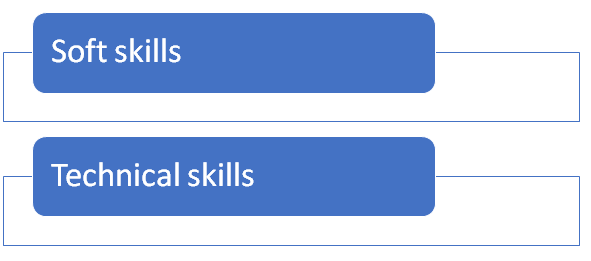
Soft skills
Soft skills are the skills that describe how an individual works or interacts with others. These are also known as non-technical skills.

For example:
- Effective communication
- Problem-solving
- Critical thinking
- Time management
- Attention to detail
Technical skills
Technical skills are the specialised knowledge and expertise required to perform a specific task.

For example:
- Painting
- Making a sandwich
- Lifting a box
- Changing a nappy
How to Create an Observable Behaviour?
Observations need to be broken down into what the assessor is expected to ‘see’.
For instance, what are you looking for if you need to see a student follow WHS requirements?
What examples of communication are you looking for if you need to see them communicate effectively?
Observable behaviour for safe lifting technique
- Assessed the areas and the load
- Made sure there were no obstructions on the way
- Kept a wide base of support:
- Shoulder-width apart, with one foot slightly ahead of the other
- Squatted down, bending at the hips and knees only.
- If needed, place one knee on the floor and another knee in front, bent at a right angle (half-kneeling).
- Kept good posture.
- Look straight ahead, and keep your back straight,
- chest out, and shoulders back.
- Slowly lifted the box by straightening hips and knees
- Kept the back straight and avoided twisting while lifting the box.
- Held the load as close to the body as possible, at the level of the belly button.
- Used feet to change direction, taking small steps.
- Lead with the hips as you change the direction.
- Kept shoulders in line with hips as the student moved.
FAQs:
1) What is observable behaviour in assessment writing?
Observable behaviour refers to actions or responses that you can see, measure, and document during an assessment. It ensures assessments are clear, objective, and based on real performance.
2) Why is it important to focus on observable behaviour when writing assessments?
Focusing on observable behaviour makes assessments more measurable, objective, and fair. It provides clear evidence of learner competence, ensuring compliance and improving assessment reliability.
3) How can I incorporate observable behaviour into my assessments?
4) How do I write effective assessment criteria for observable behaviour?
5) What are the benefits of using observable behaviour in assessments?
It improves clarity and transparency, making it easier to assess learners consistently. It also enhances fairness by judging every learner based on observable actions, which reduces subjectivity in the evaluation process.
6) How can observable behaviour improve learner outcomes?
By focusing on observable behaviour, learners are clear on the expectations and what they need to demonstrate. This leads to more focused learning, better preparation, and more accurate assessment of their skills.
7) Can observable behaviour be applied to both practical and theoretical assessments?
Yes, it can be used for both. In practical assessments, it involves physical actions or skills, while in theoretical assessments, it could be the way learners explain concepts or apply knowledge in context.
8) What are some common mistakes when writing assessments based on observable behaviour?
Common mistakes include being too vague, using abstract language, or failing to link behaviours to clear learning outcomes. Ensure the assessment criteria are specific, measurable, and aligned with the training objectives.
9) How do I assess a learner’s behaviour in a remote or online setting?
10) How can I ensure my observable behaviour assessments meet compliance standards?
Ensure your assessments align with relevant training package requirements and national standards. Regularly review your assessments for clarity, consistency, and compliance with industry best practices.
Disclaimer:
The information presented on the VET Resources blog is for general guidance only. While we strive for accuracy, we cannot guarantee the completeness or timeliness of the information. VET Resources is not responsible for any errors or omissions, or for the results obtained from the use of this information. Always consult a professional for advice tailored to your circumstances.